Facial contouring surgery risks: what the published record shows
Jaw and cheekbone reduction cut and reshape bone. Here is what surgeons' own published case series report about infection, numbness, bone healing and revision.
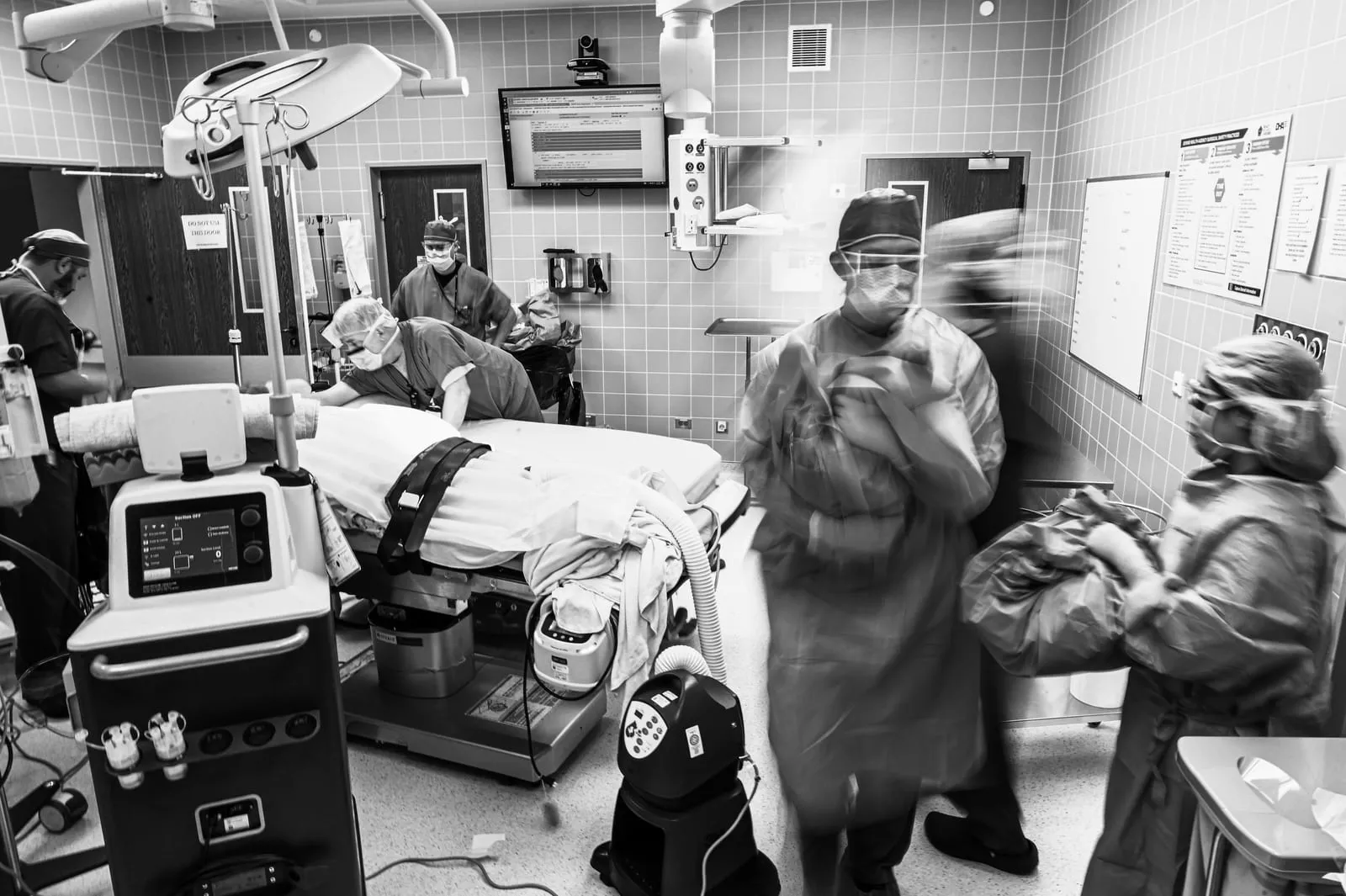

The clinics call it V-line surgery, and the name does a lot of quiet work. It sounds like a refinement, something in the same family as a filler or a thread lift. The operating list tells a different story: a saw, a general anaesthetic, and the removal of pieces of the jaw, the cheekbones or both.
That is not a reason to avoid it. It is a reason to read what surgeons write about it for each other, which is franker than what they write for patients.
What does facial contouring involve?
Review articles describe two operations as the most common in East Asia: reduction of the mandibular angle, the corner of the jaw below the ear, and reduction of the zygoma, the cheekbone. They are often joined by genioplasty, in which the chin is cut and moved or narrowed.
Western facial skeletal surgery mostly adds, using implants to sharpen contours. The East Asian tradition mostly subtracts. A widely cited review notes that reduction techniques were developed and are performed far more often in Asia, where a square lower face is commonly seen as heavy.
Most of the work is done through incisions inside the mouth, so there is no visible scar on the face. Cheekbone reduction usually adds a small cut in front of the ear. Working through the mouth has consequences: the surgeon operates down a narrow tunnel, close to nerves and vessels, in a space that cannot be made sterile.
What does the largest published review of jaw contouring show?
A Korean surgeon published a review of 588 mandible-contouring operations carried out over five years. The patients were divided into four groups: jaw angle resection alone (190), angle resection with chin surgery (130), angle resection with cheekbone reduction (114), and all three together (154).
Look at those proportions first. More than two thirds of the patients had at least two bony procedures in one sitting, and a quarter had three. Combined surgery is the norm, not the exception.
The review reports wound discharge and infection occurring within two weeks in 19 patients, 3.23% of the total, typically showing as swelling and tenderness around the jaw. Three in a hundred is low for surgery performed through the mouth, but it is not negligible for a traveller, because two weeks is exactly when many patients are on a plane or newly home.
How common is numbness?
The nerve that supplies feeling to the lower lip and chin runs through a canal inside the jawbone and emerges through a small opening near the chin. Angle resection and chin surgery both work close to it. It can be stretched by retraction, bruised by swelling, or cut.
The 588-case review tracked altered sensation in three areas, the chin, the lower lip and inside the mouth, and it did so across four time bands: three to six months, six to nine months, nine months to a year, and more than a year. The fact that the author needed a “more than a year” column tells you what you need to know. For some patients numbness is not a matter of weeks.
There is a catch in the data, and the paper states it. Average follow-up was 14 weeks, and follow-up continued only until a patient reported satisfaction and had no complaints. Patients who stopped coming back are missing, and an overseas patient is the most likely kind to stop coming back.
What can go wrong with cheekbone reduction?
In the standard operation, the cheekbone is cut at the front and at the arch near the ear, moved inward and fixed with small plates and screws. One surgical paper describing the technique lists the characteristic risks: the cheekbone’s shape is complicated and must match side to side, results can be disappointing, and complications include nerve damage and nonunion, meaning the cut bone ends fail to knit, which requires a second operation to correct.
A systematic review and meta-analysis published in 2022 compared complication rates across the different ways of performing the operation. Its conclusion was that an L-shaped cut without removing bone reduced the cheekbone effectively with the lowest complication rate of the techniques studied. The same sentence carries the trade-off: with that method, the amount of reduction is limited.
That is the pattern throughout this field. The more bone is taken or moved, the bigger the change and the bigger the risk. When the cheekbone is moved inward, the soft tissue of the cheek loses some of its support, which is why sagging is a recognised concern and why some surgeons limit how far they go.
Why are the published numbers probably optimistic?
Three reasons, none of them a criticism of the authors.
They are self-reported. A surgeon who publishes a series of several hundred cases is, almost by definition, experienced and confident in the results.
Follow-up is short. Fourteen weeks is long enough to see an infection and too short to see how a nerve recovers or how the face settles.
The most serious events are too rare to show up. A series of a few hundred operations will say little about severe bleeding or anaesthetic emergencies, which are measured per many thousands. Their absence from a paper is not evidence that they do not happen. Any operation that cuts bone near large vessels, under general anaesthetic, with swelling around the airway afterwards, carries those risks, and it is the reason overnight monitoring and a properly equipped facility matter.
What should you ask before agreeing to bone surgery?
- Which bones will be cut, and how many procedures are planned in one anaesthetic?
- Who gives the anaesthetic, and is that person an anaesthesiologist who stays for the whole operation?
- Where will I be monitored the first night, and what happens if I bleed or have trouble breathing at 3 a.m.?
- How do you check the position of the nerve before surgery, and how do you record numbness afterwards?
- How long do you want me to stay in Korea before flying?
- If the bone does not heal or the result is uneven, who treats that, and at whose cost?
Removed bone cannot be replaced. If a surgeon suggests taking less than you asked for, that is usually caution, not a lack of ambition. You can look up a clinic’s type and the number of doctors it reports in our clinic directory; for an operation of this size, whether the facility is a single-doctor clinic or a hospital is a fair thing to weigh.
Common questions
- Is facial contouring more serious than rhinoplasty or eyelid surgery?
- It is a different category of operation. It involves cutting facial bones under general anaesthetic, often two or three areas in one sitting, so the anaesthetic is longer and the recovery heavier.
- Is numbness after jaw surgery permanent?
- Published reviews follow altered sensation over periods from three months to more than a year, which shows that it resolves slowly in many patients and persists in some. Ask your surgeon how they record it and what they have seen.
- Can removed bone be put back?
- No. Bone that has been cut away is gone. Later correction means implants, grafts or further bone surgery, which is why conservative planning matters.
Sources (5)
- Plastic and Reconstructive Surgery Global Open, via PubMed Central, Incidence of Complications Associated with Mandibuloplasty: A Review of 588 Cases over 5 Years, checked 13 November 2026
- Aesthetic Plastic Surgery, via PubMed, A Systematic Review and Meta-Analysis of Complications among Various Reduction Malarplasty, checked 13 November 2026
- Journal of Craniofacial Surgery, via PubMed Central, Intraoral Zygoma Reduction Using L-shaped Osteotomy, checked 13 November 2026
- Seminars in Plastic Surgery, via PubMed Central, Facial Contouring Surgery for Asians, checked 13 November 2026
- Oral and Maxillofacial Surgery Clinics of North America, via PubMed, Zygoma and Mandibular Angle Reduction: Contouring Surgery to Correct the Square Face in Asians, checked 13 November 2026